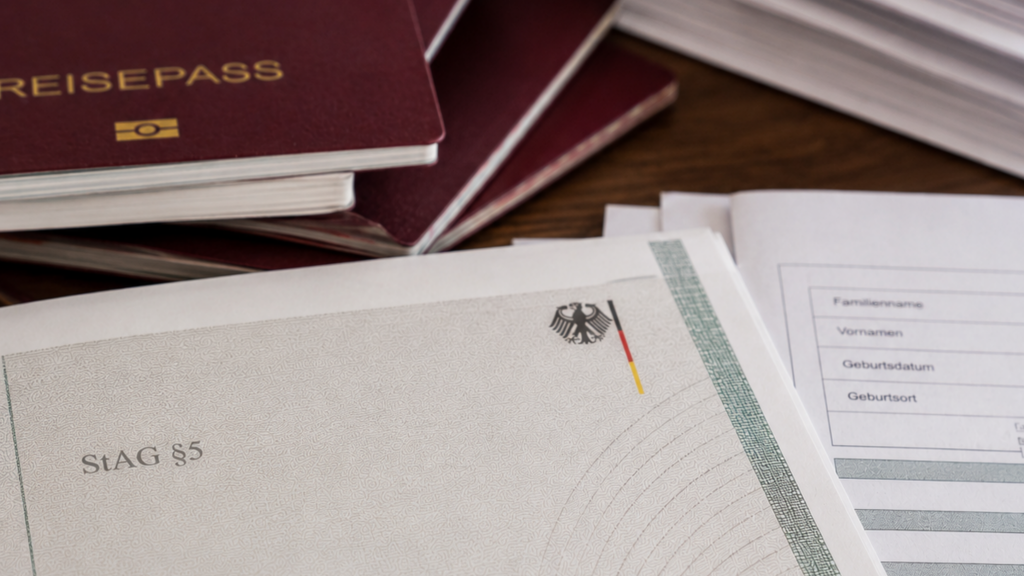
Citizenship by Descent
Starting on June 27, 2024, Germany officially began allowing dual citizenship. This means when applying for German citizenship, you are not required to renounce your previously held citizenship.
German citizenship is primarily based on the principle of jus sanguinis, or “right of blood”, meaning citizenship is determined by the nationality of the parent and not where the child is born. To qualify for German citizenship by descent, you must be able to prove an unbroken chain of German ancestry, while meeting other eligibility criteria. There are various laws that have changed over time, and depend on whether you have a German-born parent or grandparent.
German Citizenship through Parents
You may qualify for German citizenship by descent if you have a direct ancestor that was a German citizen, such as a German parent.
You are eligible if born to married parents
- Between January 1, 1914, and December 21, 1974 – if your father was a German citizen at time of birth.
- Between January 1, 1964, and December 31, 1974 – if you were born to a German mother and a foreign father and you would be stateless without German citizenship.
- On or anytime after January 1, 1975 – if either parent must have been a German citizen at birth.
You are eligible if born to unmarried parents
- On or after January 1, 1914 – your mother must have been a German citizen at time of birth.
- On or after July 1, 1993 – if your father was a German citizen and his paternity can be established by law.
- Before July 1, 1993 – if your father was a German citizen and his paternity can be established by law, you’ve lived in Germany for 3 years, you declared German citizenship before turning 23.
German Citizenship through Grandparents
Qualifying for German citizenship by descent through German grandparents may be more difficult, and it’s important to make sure you meet all the conditions.
An amendment to the law on August 20, 2021 made provisions for specific cases, including those who lost or were denied citizenship due to Nazi persecution, German mothers who relinquished their citizenship upon marrying a foreigner, and their descendants.
Restoration based on Political, Racial, or Religious Grounds
Under Section 15 of the Nationality Act, those who surrendered, lost or were denied German citizenship between 30 January 1933 and 8 May 1945 because of persecution on political, racial or religious grounds are entitled to ‘renaturalization’.
Eligibility includes those who:
- surrendered, lost or were denied their German citizenship prior to 26 February 1955
- were excluded from the legal acquisition of German citizenship through marriage or the collective naturalization of ethnic Germans during this period
- were not granted naturalization upon application, or were excluded from naturalization which would otherwise have been possible upon application
- gave up or lost their ordinary residence in Germany provided that residence was established prior to 30 January 1933 OR if they were children at the time, was established even after 30 January 1933.
Restoration based on Gender Discrimination Grounds
Additionally you may qualify to make a declaration of German Citizenship on gender discrimination grounds, if you are or you are a descendant of someone who was either unable to acquire German citizenship by birth due to previously applicable gender-discriminatory provisions in citizenship law or who have lost their German citizenship acquired by birth.
This category includes:
- You were born before 1975 to a German parent but did not acquire German citizenship. For example, you were born to a German mother and foreign father.
- You were born before 1975 to a German mother, who before the birth of the child, married a foreigner and had to give up her German nationality
- You were initially entitled to German citizenship by birth, but lost it after being “legitimized” by your foreign father.
In all cases, you must have been born after May 23, 1949
These categories extend to the descendants
Getting citizenship through your grandparents can be difficult. Reach out for a free consultation with our citizenship professionals to see if you qualify!
How to Apply
- Procure the required documents, certified and legalized
- Download and complete the application from the Bundesverwaltungsamt (BVA, Federal Office of Administration) website
- Submit your documents to the BVA or your local German consulate or embassy, who will then forward your application to the Federal Office of Administration.
- You will receive a file number upon confirmation, which you can reference to track the progress of your application.
- Receive German citizenship certificate!
Citizenship by Marriage
If you are married to a German citizen and have been living in Germany together for 3 years, you likely qualify for German citizenship.
To be eligible for German citizenship through marriage, you must meet the following requirements:
- Have been married to a German citizen for a minimum of 2 years.
- Have been living in Germany for at least 3 years (extending to 4 if your spouse is a naturalized citizen).
- Proof of knowledge of the German language at the B1 level using the European Framework of Reference for Languages (CEFR), determined by an official test.
- Proof of income.
- Proof of knowledge of the German Legal and Social Systems by passing a German citizenship test (Einbürgerungstest).
- Clean criminal record
Applications are to be submitted to your local immigration office (Einbürgerungsamt) where there is usually a few months wait while they process the application.
Do you meet the requirements and require assistance with your application for German citizenship through marriage? Schedule a free consultation call with our experts!
Apply for a Passport
Whether you just acquired your German citizenship by descent or by marriage, or you are a German citizen by birth, you are entitled to a German passport. You will need proof of your German nationality, such as a citizenship certificate or identity card, when attending your passport appointment.
- If you live in Germany, you can make an appointment directly at the citizens’ office (Bürgeramt) in your municipality.
- If you live abroad, you will need to make an appointment with your nearest German consulate or embassy.
In either case, you will need to attend the appointment in person, presenting all the necessary documents, including a recent passport photo, proof of identity and citizenship. Fingerprints will also be taken at the appointment.